


MingloTalk: AI Character Chat
4.71.19K Reviews
App Specs
- Version
- 1.0.8
- Updated On
- License
- Free
- Downloads
- 1,000,000+
- Developer
- shopihi
- Categories
- Entertainment
- Platform
- Android
Screenshots
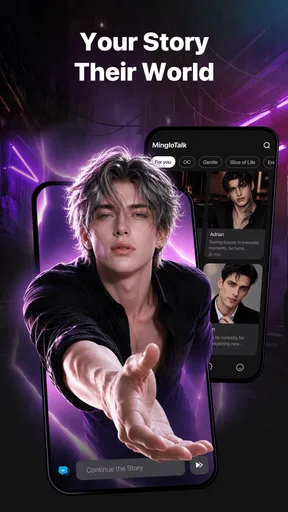
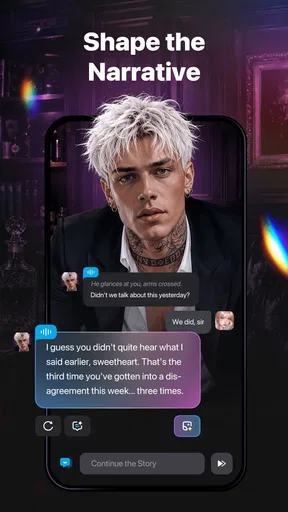
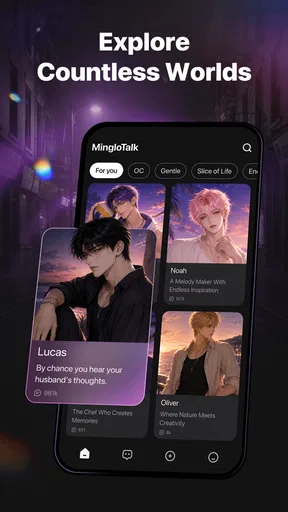
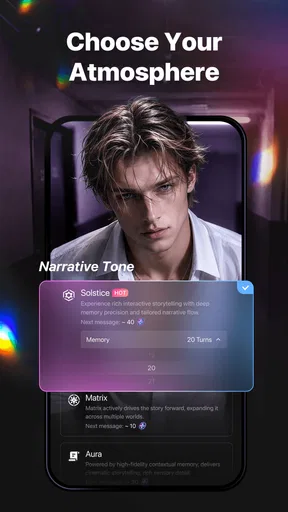
 Analysis by AppCompare
I approached MingloTalk: AI Character Chat as an entertainment app for people who want conversation to feel more playful and imaginative than a standard messaging window. Its central idea is simple: chat with AI characters, spend time in interactive scenarios, and shape a personal AI world rather than treating every exchange as a one-off question-and-answer session. That makes it more appealing to curious users who enjoy roleplay, creative prompts, and ongoing fictional conversations than to someone looking for a serious productivity assistant.
The app comes from shopihi and is free to install, with optional purchases ranging from $1.99 to $199.99 per item. It is aimed at a mature audience, carrying a 17+ content rating, so I would not treat it as a family-friendly chat toy. The current version is 1.0.8, and it supports devices running Android 7.0 or later. Those details matter because the experience depends not only on the conversation itself, but also on whether your phone can comfortably handle a modern entertainment app and an internet-dependent AI interaction.
How MingloTalk feels during ordinary use
The first thing I noticed is that the app’s appeal depends heavily on how deliberately I approached it. Opening a character chat with a vague “hello” can produce a flat beginning, while giving the conversation a setting, mood, or clear role immediately makes the experience more engaging. I found it more useful to think of each chat as a scene that I was directing. A short prompt such as “help me plan a mysterious evening in an old coastal town” gives the exchange somewhere to go, whereas a general request for conversation leaves too much of the creative work to the app.
That is also where the “AI world” concept becomes more interesting than an ordinary chatbot. Instead of using it only for isolated answers, I could return to a character with an ongoing intention: continue a story, test a dialogue idea, explore a fictional personality, or simply unwind with an imaginative exchange. The result is not automatically deep every time, but the format encourages continuity. Users who enjoy building scenarios gradually will likely get more from it than people who expect every message to be instantly useful.
In the entertainment category, MingloTalk sits somewhere between character roleplay and casual social simulation. Compared with a normal messaging app, it removes the pressure of waiting for another person and lets me control the direction of the conversation. Compared with a general AI assistant, it places more emphasis on personality and atmosphere than on getting a precise practical answer. That distinction is important: if I need dependable research, careful calculations, or a formal writing tool, I would choose a dedicated assistant instead.
Speed expectations and the rhythm of a conversation
Perceived speed is especially important in a chat app because even a short pause can break the mood of a scene. In my experience, the best conversations are the ones where I send compact, purposeful prompts and let the response develop before adding another instruction. Long, complicated requests can make the exchange feel less immediate, not necessarily because the app is failing, but because there is more context for the AI to interpret.
I would not judge MingloTalk by the same standard as a locally installed offline game. AI responses require an active connection and processing beyond the phone itself, so response timing can vary with network conditions and service load. A quick exchange feels natural when the connection is steady. If the response takes longer, I try not to tap repeatedly or resend the same message, since that can make the conversation harder to follow and may create duplicate turns.
Worth Reading Before You Choose

EA SPORTS FC Mobile 26 Is a Bigger Football Game, but It Takes Time

Flipboard Shows What News Apps Must Do Beyond the Feed

Switching to Android Auto Means Rethinking Your Driving Routine

Google Calendar Makes a Crowded Week Easier to Manage

Ludo King Makes the Most of the Minutes Between Plans

Baby Panda World Brings Quick Play to Modern Phones, but Its Game Library Feels Busy
A useful habit is to separate creative direction from ordinary conversation. I get a cleaner result when I first establish who the character is and what kind of interaction I want, then continue with shorter messages. This is one of the less obvious ways to make the app feel faster: concise prompts reduce the amount of correction needed afterward. Instead of writing a large paragraph that mixes setting, personality, plot, and tone, I can introduce those elements one at a time.
The app’s strong public reception suggests that many users find the basic experience appealing. It holds a 4.7 average from around 21 thousand ratings, with more than a thousand written reviews, and it has passed one million installs. I see those figures as evidence of broad interest rather than a guarantee that every conversation will be smooth. AI entertainment is subjective; a character style that feels lively to one person may feel repetitive or too agreeable to another.
What happens during longer or heavier sessions
The most demanding moments are not necessarily dramatic. A long roleplay session can accumulate many details, and that creates two kinds of pressure: the phone has to keep the app responsive, while the conversation itself has to preserve enough context to remain coherent. I found it easier to maintain quality by treating a long session as a series of scenes. When the setting changes, I can briefly restate the important facts rather than expecting every earlier detail to remain equally prominent.
This approach has a practical benefit. It makes the conversation easier to recover if I leave the app, lose connection, or decide to return later. A compact recap such as the characters’ goals, the current location, and the unresolved problem is more useful than trying to reconstruct an entire storyline. It also gives me control over which details matter, instead of allowing old, unimportant exchanges to dominate the direction.
Heavy use can also expose the difference between an entertainment app and a traditional utility. If I spend a long time generating dialogue, the value comes from the experience, not from completing a measurable task. That makes the app easy to overuse without noticing. I recommend setting a clear purpose for a session, such as developing a scene or relaxing for a while, especially if you are sensitive to endless conversational loops.
On a phone with limited free storage or modest memory, any app can feel less comfortable when many other programs are open. I would close unused apps before a long session, keep the operating system reasonably maintained, and avoid judging performance while the phone is already struggling with several demanding tasks. These are sensible precautions rather than special requirements advertised by the developer, but they make interactive apps more pleasant in general.
Battery use is another consideration for extended sessions. A chat that keeps the screen active and repeatedly exchanges data can be more demanding than reading a static article or sending a few conventional messages. I would use a stable Wi-Fi connection for a long creative session when possible, not because the app promises a particular performance level there, but because it reduces one common source of interruptions and avoids relying entirely on mobile data.
Reliability, interruptions, and recovering a good chat
Reliability in MingloTalk has two layers. The first is technical: whether the app opens, accepts messages, and continues responding. The second is conversational: whether the character remains consistent enough for the interaction to feel intentional. Even when the technical side works, a scene can lose momentum if the AI misunderstands a key instruction or changes its tone unexpectedly.
I found that clear corrections work better than vague complaints. If a character suddenly ignores the setting, I can write a short instruction that restates the scene and the desired behavior. It is usually more effective to say what should happen next than to spend several messages explaining that the previous response was wrong. This turns a potential dead end into a manageable part of the roleplay.
For important creative work, I would keep my own notes outside the app. That is not a criticism of a particular storage system; it is simply good practice whenever a conversation matters. A separate note containing names, relationships, setting rules, and the latest plot point lets me rebuild the experience if I need to restart a chat or if the conversation drifts. It also makes the app more useful as a writing companion, because I am not relying on a single chat to hold the entire structure of a story.
There is a trade-off between spontaneity and control. If I give the character strict instructions at every turn, the exchange may become predictable. If I provide no guidance, the app may wander into a direction I do not enjoy. I prefer a middle path: define the tone and boundaries early, then allow smaller surprises within that framework. That produces a more natural experience than trying to script every sentence.
Because the app is rated for mature users, I would also approach conversations with sensible personal boundaries. The age rating is not a minor label to ignore, particularly if the device is shared with younger people. I would not hand the app to a child simply because the interface looks conversational, and I would avoid treating an AI character as a substitute for a trusted person when a situation involves serious emotional, medical, legal, or financial decisions.
Device limits and who will enjoy it most
Android compatibility starts at version 7.0, which gives the app a broad potential device range. Still, operating-system support alone does not tell me how comfortable every phone will feel. Older hardware may be perfectly capable of opening a chat while feeling less smooth during extended use, especially if storage is nearly full or many background processes are active. I would expect the most consistent experience from a device that is already comfortable with current entertainment apps.
The app is a good match for someone who likes character-driven conversations, improvising fictional situations, or using AI to turn a spare ten minutes into a small creative exercise. It can also suit writers who want to test dialogue from a character’s point of view, provided they treat the output as brainstorming material rather than finished work. The ability to return to an evolving fictional exchange is more valuable here than the ability to produce a single polished answer.
I would be more cautious recommending it to someone who dislikes open-ended apps. MingloTalk does not appear to be designed around a fixed progression, a clear completion screen, or a traditional game loop. If you prefer a game with defined rules, visible objectives, and predictable rewards, a conventional game will probably be more satisfying. Likewise, someone seeking a private one-to-one substitute for human companionship should keep expectations grounded: an AI character can be engaging, but it is still an artificial interaction.
The mature rating also narrows the audience. Parents looking for a harmless creative app for children should skip this one and select something specifically intended for younger users. Adults who are comfortable with imaginative AI conversations may find the rating appropriate, but they should still decide in advance what kinds of scenarios they want to explore and when they want to stop.
The free entry point makes it easy to try without committing money immediately. However, the presence of optional purchases from $1.99 to $199.99 per item means I would review each purchase screen carefully before confirming anything. The wide range makes budgeting especially important. I would begin with the free experience, decide whether the conversations genuinely fit my habits, and only then consider spending. An entertaining chat can become poor value if I buy impulsively without knowing how often I will return.
An everyday scenario where the app makes sense
Imagine finishing work or study with a half-formed idea for a short story but no energy to write a full draft. I could open a character conversation, establish a setting, and ask the AI to challenge the protagonist with a small problem. Rather than requesting an entire story, I would use the exchange to test three things: how the character reacts under pressure, which details create a believable mood, and whether the conflict is interesting enough to continue.
After a few turns, I would copy the useful ideas into my own notes and end the session. This workflow keeps MingloTalk in the role where it is strongest: an interactive spark generator. It avoids the common mistake of asking the app to do all the creative work, then feeling disappointed when the result sounds generic. The human user still chooses the premise, rejects weak directions, and shapes the final idea.
A different everyday use would be a short relaxation session after a busy day. I might choose a gentle fictional setting and ask for a calm conversation rather than an intense plot. The benefit is the ability to control the mood more precisely than with a random social feed. The drawback is that an open-ended chat can continue indefinitely, so I would decide on a stopping point before starting if I wanted the session to remain brief.
Where alternatives are the better choice
MingloTalk is more distinctive than a standard messenger because it does not depend on another person being available, but a real messaging app remains better when I need genuine human context, shared memories, and a reliable response from someone I know. The AI format is convenient, yet convenience is not the same as friendship.
A general-purpose AI assistant is the stronger option for summarizing documents, organizing factual research, solving structured problems, or helping with work that needs precision. MingloTalk’s entertainment focus is an advantage when personality matters, but it becomes a limitation when accuracy and accountability matter more. I would not use a character chat as my only source for consequential decisions.
Traditional games are preferable for users who want clear mechanics and a sense of progress. MingloTalk offers freedom rather than a defined challenge, which can feel refreshing for one person and aimless for another. The right choice depends on whether you want to shape the experience yourself or follow a system created by a game designer.
There is also a practical difference from offline entertainment. A book, downloaded video, or offline game can remain available when connectivity is poor. An AI conversation is more dependent on an active service, so it is not the app I would choose as my only option for travel, weak-signal areas, or situations where I need guaranteed access without interruptions.
My performance verdict
After looking at the app through speed, heavier use, reliability, and device constraints, I see MingloTalk as a focused entertainment experience rather than a universal AI tool. Its strongest quality is the way it encourages me to participate in the creation of a conversation. The more specific my setup and the more willing I am to guide the scene, the more rewarding the interaction becomes.
Its weaknesses are tied to the same open-ended design. Response timing can depend on connection and service conditions, long chats need some personal organization, and character consistency may require occasional correction. The mature rating limits who should use it, while optional purchases mean that free access should be explored carefully before spending. None of these points makes the app unusable, but they do shape the kind of user who will enjoy it.
With over one million installs, shopihi has clearly attracted a substantial audience, and the high average rating reflects strong interest in this style of AI entertainment. I would recommend trying the free version if you enjoy roleplay, character dialogue, or creative experimentation and your expectations are realistic. Start with a small scenario, give the character a clear direction, save the details that matter, and judge the experience by whether it adds something to your own imagination.
My recommendation is simple: choose MingloTalk when you want an AI conversation to feel like a flexible creative space, not when you need a precise assistant, a structured game, or a replacement for real human connection. Used with that distinction in mind, it can be a surprisingly enjoyable way to build scenes, explore personalities, and turn an ordinary break into a short interactive story.
Pros
- Wide range of AI characters with different personalities and conversation styles.
- Easy-to-use interface makes starting a chat quick and straightforward.
- Useful for casual entertainment
- roleplay
- and creative conversation ideas.
- Conversations can feel personalized as characters respond to your prompts.
- Regular character variety helps keep the experience fresh over time.
Cons
- Some replies may feel repetitive or lack genuine emotional depth.
- Free access may be limited by ads
- credits
- or premium conversation features.
- AI characters can occasionally misunderstand context or give inconsistent answers.
- Privacy concerns may matter when sharing personal details in chats.
- The app requires an internet connection for most conversations.
FAQs for MingloTalk: AI Character Chat
What is MingloTalk: AI Character Chat?
MingloTalk: AI Character Chat is an entertainment and conversation app that lets you interact with AI-powered characters through text-based chats. Characters may have different personalities, backgrounds, and conversation styles, making the experience feel more varied than chatting with a standard assistant. It is mainly designed for casual conversations, roleplay, storytelling, and creative interaction rather than professional advice or factual research.
Can I create or customize characters in MingloTalk?
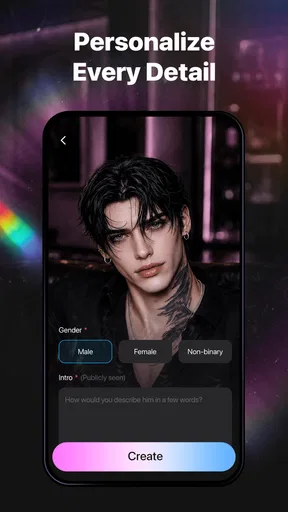
The character options and customization tools may depend on the current version of MingloTalk and your account access. In general, apps in this category allow users to select from existing personalities and may offer ways to adjust traits, prompts, or conversation settings. Before downloading, check the latest app description and in-app menus to confirm whether character creation, public sharing, or advanced customization is available on your device.
Is MingloTalk free to download and use?
MingloTalk may be available as a free download, but some features can require in-app purchases, a subscription, or a limited number of free messages. Premium access may unlock additional characters, longer conversations, faster responses, or other exclusive tools. Pricing and available plans can change, so review the store listing and subscription screen carefully before confirming any purchase or starting a trial.
Does MingloTalk require an internet connection?
Yes, you should expect to need an active internet connection for most or all of the app’s main functions. AI conversations are generally processed online, meaning messages must be sent to remote servers before a response is generated. Performance can vary depending on your connection, server availability, and usage limits. Offline access may be limited or unavailable, so mobile data charges could apply.
Is MingloTalk safe and suitable for everyone?
MingloTalk is intended for entertainment, but AI character conversations can sometimes produce inaccurate, unexpected, mature, or emotionally intense responses. Users should avoid sharing passwords, payment details, private addresses, or other sensitive information during chats. Parents should review the app’s age rating, privacy policy, and content controls before allowing younger users to access it, since character-based conversations may not be suitable for every age group.


